Last week, we got together with two great companies that we work with - Yomego and eModeration – to run a seminar on how to avoid a social media disaster. Yomego is a social media specialist, and has just launched a new online reputation monitoring tool (Social Media Reputation, or SMR) that, among other things, helps brands spot an issue early, so they can respond quickly and avoid a disaster. eModeration is a moderation and community management company, and there’s not much it doesn’t know about managing online communities through a crisis. We provided the ‘response’ bit – how to communicate through a potential crisis.
I should mention that both Yomego and eModeration are clients of ours, but it made so much sense to join forces on this issue. It also really proved to me – more than ever - that no single marketing discipline ‘owns’ social media. We need specialists, not generalists, in some areas – and we need to work with the agencies round us to provide really good advice (never more so than when a brand is facing a crisis).
Our ‘breakfast bunker briefing’ was a closed seminar for around 40 people in the Cabinet War Rooms, with some top brands in the audience. (The War Rooms are a great venue by the way, if you’re ever planning an event. We were in the old ‘switch’ room, where an emergency power supply for London could be switched on if regular supplies were stopped by bombing. Seemed somehow appropriate.)
Our slides from the day are on Slideshare (getting top billing today, which is great); and on the blog that we set up to address some of the issues from the day. We’re also issuing a thought piece on avoiding social media crises which I’ll post soon.
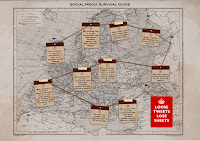
But first, we opened the seminar with Yomego’s Steve Richards, setting the scene for how an issue becomes a crisis on social media, which I’ve pasted below – it’s brilliant. Any resemblance to real social media crises / brands is unintended etc…
A portrait of a social media crisis (by Steve Richards, Yomego).
It’s a sunny Wednesday morning, the sun is shining and there are few signs of the menacing clouds of discontent soon to gather. Our protagonist is the MD at HUSH – that’s HabitKatBucks United Southwest Holdings – a recent merger of several companies who had had some ‘issues’ recently.
On this fine day, our man, who we’ll call Mr X to save his blushes, arrived at his desk at 8.30 as usual, double-shot caramel moccaccino in hand, to find an email from his PA Debbie who’d overheard a bad customer experience on the train that morning.
“Don’t worry, Debs” Mr X assured her: bad reviews are ten a penny, but sales are up and the HUSH brand has just crashed through the magical 100 likes on Facebook, or so his daughter had assured him.
Ten minutes later, Mr X’s new Marketing Director flagged up a familiar sounding complaint he’d found on Twitter. Sounded potentially damaging, but, undaunted, Mr X dismissed it. He was feeling bullish and besides, his double-shot was going cold.
“People whinge all the time,” he repeated. (The Marketing Director really should meet Mr X’s wife who has turned moaning into an art form.)
An hour later, HUSH’s PR Manager emails Mr X: there’s a video, apparently, on YouTube, showing the source of the complaint – an HUSH store manager appears to throw a cup of coffee in the face of a disgruntled female customer.
It looks bad. Mr X tells the PR Manager to get the PR Director to deal with it immediately.
Two hours later, the Daily Mail calls Mr X wanting an official comment on ‘Cappuccino Gate’ as it’s being called. Mr X’s blood is up. He’s furious. He calls the PR Manager to find out why it hasn’t been dealt with only to discover the PR Director’s on an outward bound training course in the Brecon Beacons. “No phone reception. Sorry.”
“Surely the PR agency knows this hack at the Mail?” Mr X demands, only to be reminded he’d had the agency dropped three months ago – “luxury item” was the phrase he’d apparently used at the time.
Mr X decides to Google ‘Cappuccino Gate’. There are links galore. He loosens his tie. This is not ideal. Not ideal at all. He watches the YouTube video (currently 15,000 views), reads the blogs. Trouble’s brewing. The forums are abuzz; Facebook is awash; Mr X needs ‘awayout.’
The content links have acted like candles and disgruntled moths are fluttering around, all too eager to share their bad experiences. Mr X does what everyone in his position would do - he concludes he is surrounded by idiots. Mr X was always a fan of Billy Ocean and when the going gets tough…
He resolves to snuff these candles out personally.
He demands access to the HUSH feed on Twitter, only to find out the @Hush hashtag was registered 18 months ago by a friendly neighbourhood anarchist called ‘Scud’, who has helpfully used Twitpic to broadcast the most damaging still of the event to his 716,000 followers, half of whom have retweeted it to their collective secondary audience of 6.2 million people.
“Breakout the Social Media Crisis Plan,” bellows Mr X to the PR Manager.
Apparently there isn’t one. Mr X draws on his military training and tells her to “Foxtrot Oscar.”
“Always fight fire with fire,” concludes Mr X – echoing his father’s motto which, incidentally, lead to Mr X Snr’s dismissal by the fire brigade. Mr X instructs his PA, Debbie, to post positive testimonials on every forum she can find under a pseudonym. The PR manager is told to delete as much negative comment as she can find on Facebook.
Bud successfully nipped, Mr X is now in his stride. He orders the Store Manager who threw the coffee to be sacked on the spot and instructs the PR Manager to post the following edict immediately on the company website: “With reference to the so-called Cappuccino-Gate fiasco, I can assure HUSH customers that this is an isolated incident. One swallow does not make a summer. (Even if the swallow in question was thrown all over a paying customer LOL). HUSH is a family company and refuses to be dragged through the ‘cyber-mud.’ (He was especially pleased with his turn of phrase.) This is a storm in a coffee cup and HUSH has instructed its lawyers to follow up on any libellous rumour-mongering.”
“That’s shown them,” he thought. Decisive leadership. Disaster averted.
But Scud has noticed the Facebook deletions and exposes the practice as ‘the most crass kind of ham-fisted corporate censorship’. Worse still, he has traced the sudden bout of flag-waving advocacy to ‘Debs’, Hush’s PA to the Managing Director. 6.2 million people are updated almost instantaneously. Mr X’s hole is suddenly a lot deeper.
Ten minutes later, Mr X receives a phone call from the Chairman. Mr X’s hardline policy has been picked up by CNN and the homepage is lead story of CNN.com. Why hadn’t they seen this coming? And what are they doing to make it go away?
The new Marketing Director hands in his notice highlighting as a parting shot that he’d just joined the ‘Bollocks to HUSH’ group on Facebook which already has 23,000 likes. The Chairman’s back on the phone; the company’s share price is down 15 per cent. Mr X stiffens his upper lip; time to draw on the Dunkirk spirit. He decides to blame the PR Director and jumps in a taxi to the Brecon Beacons. Best to tell him the news in person.
Turns out, the store manager who had thrown the coffee was conducting a staff training session on the perils of bad customer service. The hot coffee had in fact been harmless dietcoke. No harm done - it was all a misunderstanding. He was just about to seed a full explanation absolving HUSH on any involvement…until he found out he’d been sacked.
He decided to join the 'Bollocks to Hush' Facebook group instead.


